A University Field Opening Up to the World
A University Field Opening Up to the World

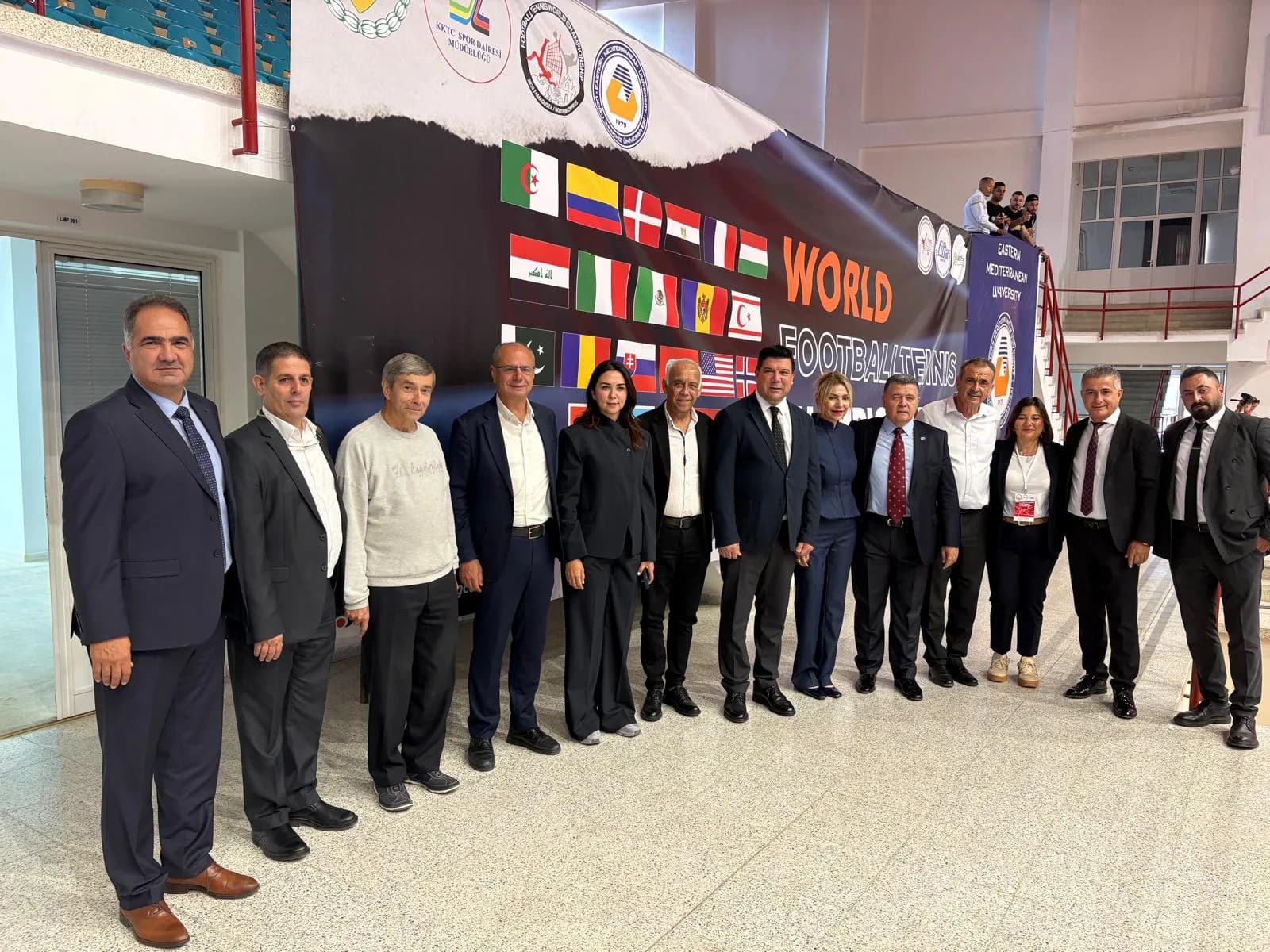
Eastern Mediterranean University is hosting the Football Tennis World Championship. The gathering of athletes at the university from Iraq, Pakistan, Romania, France, Moldova, Turkey, Hungary, TRNC, Denmark, and Slovakia carries a significance well worth reflecting on.
“Today, the athletes meeting on the same pitch remind us to make room for others' rights, labor, and presence as we pursue our own goals. I see our university laying the groundwork for this tournament and adopting healthy living as a shared corporate objective as a meaningful expression of its responsibility toward the future.”
Eastern Mediterranean University Board of Trustees Member Özdinç Akdel made a statement regarding the contributions that EMU hosting the "Football Tennis World Championship" will provide to the country, EMU students, and Famagusta.
The statement made by Özdinç Akdel included the following details:
“As a member of the EMU Board of Trustees, when evaluating this organization, I ask myself this question: What does opening the doors of a university to such a gathering bring to its institution and the society it belongs to?
The theme of 'Year of Healthy Living and Sports,' mentioned by our Rector in his opening speech, particularly caught my attention while considering this question. Honestly, I must state that I attribute great importance to this theme regarding the university's outlook on the future. I believe that this approach, which brings young people's health, living habits, and social development to the university's agenda, embodies a vision that will enrich our understanding of education.
We evaluate the success of universities through student numbers, scientific publications, international rankings, and financial indicators. Like everyone who bears managerial responsibility, I care about these indicators. However, to understand the societal value of a university, we also need to look at what kind of life is established on its campus. What habits do young people gain here? What kind of relationship do they develop with themselves and their environment? How does the university contribute to building a healthy and meaningful life for them?
The strength of the 'Year of Healthy Living and Sports' theme lies in placing these questions into an area of institutional responsibility. Making regular movement, co-creating, solidarity, and caring for one's own well-being part of campus culture is a long-term educational goal. The value of this vision will manifest in how much it touches students' daily lives throughout the year.
I also see the Football Tennis World Championship as one of the concrete manifestations of this mindset. When athletes from different countries step onto the same pitch, they bring along different languages, habits, and life stories. However, for the competition to begin, they need to meet on common ground. They accept the rules, recognize each other's efforts, and become part of the same contest. They demonstrate that it is possible to act together without having to be identical.
This is also an important part of the culture that a university should nurture. A student's world expands in proportion to the people and experiences they encounter. Even a brief conversation with an athlete from another country can prompt a reconsideration of a long-held bias about that country. Thus, alongside physical development, sports also pave the way for strengthening social bonds and mutual understanding.
The pitch itself holds powerful questions. Can we abide by the rules when our desire to win rises? Can we take responsibility in the face of failure? Can we appreciate our opponent's success? How do we act when a teammate makes a mistake? The answers to these questions concern the culture of living together as much as human character.
In this respect, I believe the idea of healthy living carries a broad meaning. Raising individuals who take care of their own bodies, recognize their boundaries, build solidarity with others, and sustain competition with fairness is among the valuable contributions a university can make to society. At the core of why I find the vision pointed out by our Rector so important lies this area that opens up thinking about human physical, mental, and social development together.
I believe one of our duties, as those who assume responsibility in board management, is to establish a link between the institution's current needs and its long-term societal contribution. Careful use of university resources, efficient operation of its facilities, and generating meaningful results from its activities are of course important. When evaluating these results, we must also consider the life habits acquired by students, the international relations established, and the bonds developed with society.
EMU's sports infrastructure serving an international gathering is valuable in this regard. The facilities developed by the university over the years are transforming into a shared space that brings people together from different countries. If this gathering inspires a desire among our students to engage in sports, encouraging them to utilize our facilities and try a new discipline, this could be one of the lasting gains of hosting this event.
Another aspect I consider important is that every athlete and guest coming to Famagusta gets to know this place through their own experience. The hospitality they receive from the very first moment until the day they leave, the friendships formed, and the experiences lived will leave an impression of this country in their minds. A smoothly functioning organization, a carefully prepared facility, and a helping hand extended in time of need will make our institution's values visible.
When the championship ends, the winners will be determined, trophies will be awarded, and teams will return to their countries. We, on the other hand, will have questions to ask afterward: What kind of experience did we provide for our students? What relationships did we lay the foundation for? How can we carry this excitement into a more active, participatory, and healthier life on campus?
As a Board of Trustees member, I see the value of our hosting in the answers to these questions. I search for the lasting return of the “Year of Healthy Living and Sports” vision right here: in transforming the brief excitement of sports into habits and relationships that will last for years in young people's lives.
Today, the athletes meeting on the same pitch remind us to make room for others' rights, labor, and presence as we pursue our own goals. I see our university laying the groundwork for this tournament and adopting healthy living as a shared corporate objective as a meaningful expression of its responsibility toward the future.”